

Which Datalogic Memor Should You Buy?
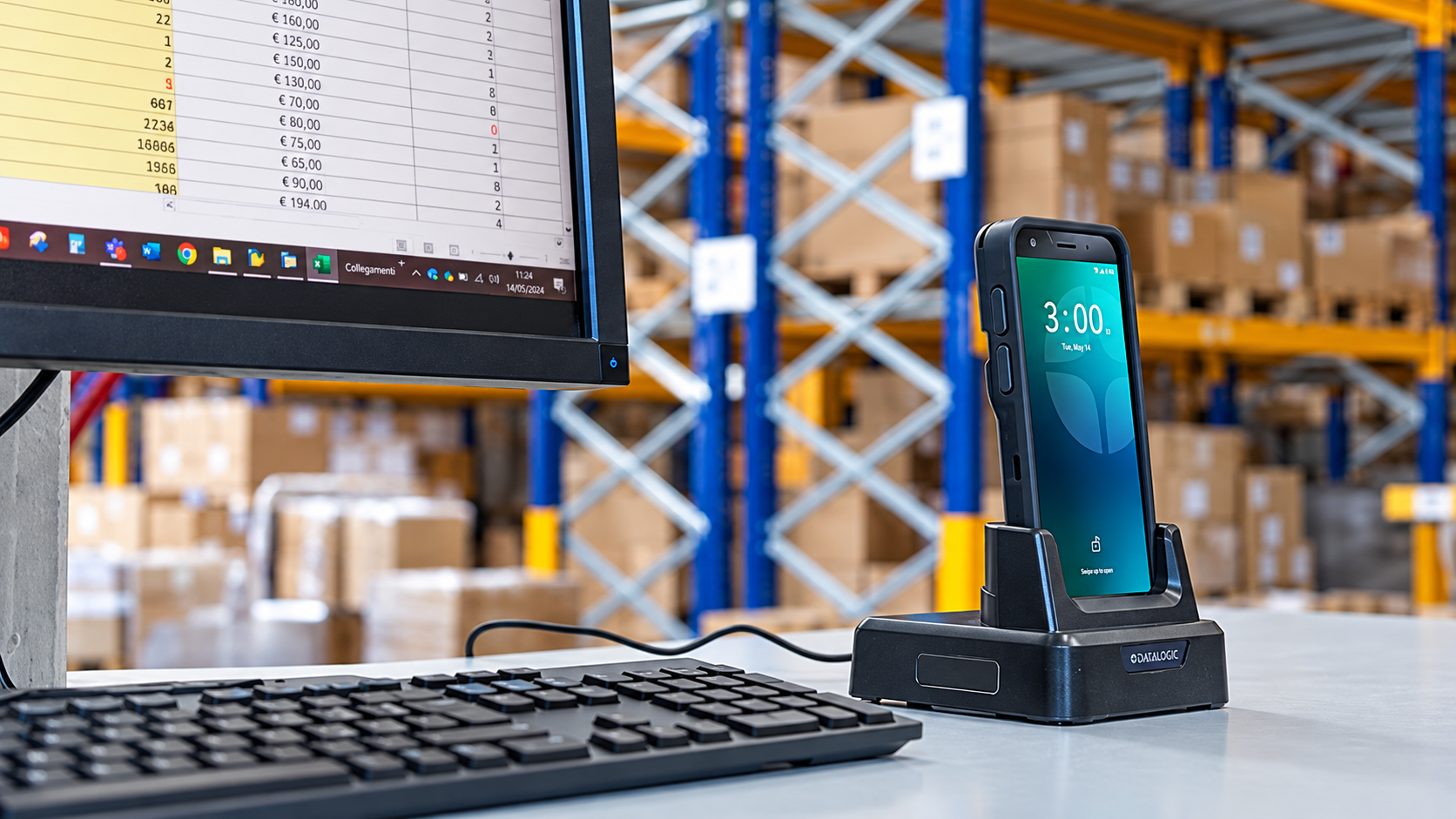
The right Datalogic Memor depends less on which model has the longest feature list and more on how your team actually works. The biggest differences come down to size, connectivity, scanning distance, ruggedness, and whether workers need cellular access beyond Wi-Fi.
If you already know your biggest priority, the comparison below can help narrow it down. After that, we’ll break down each model in more detail.
Which Datalogic Memor Fits Your Workflow?
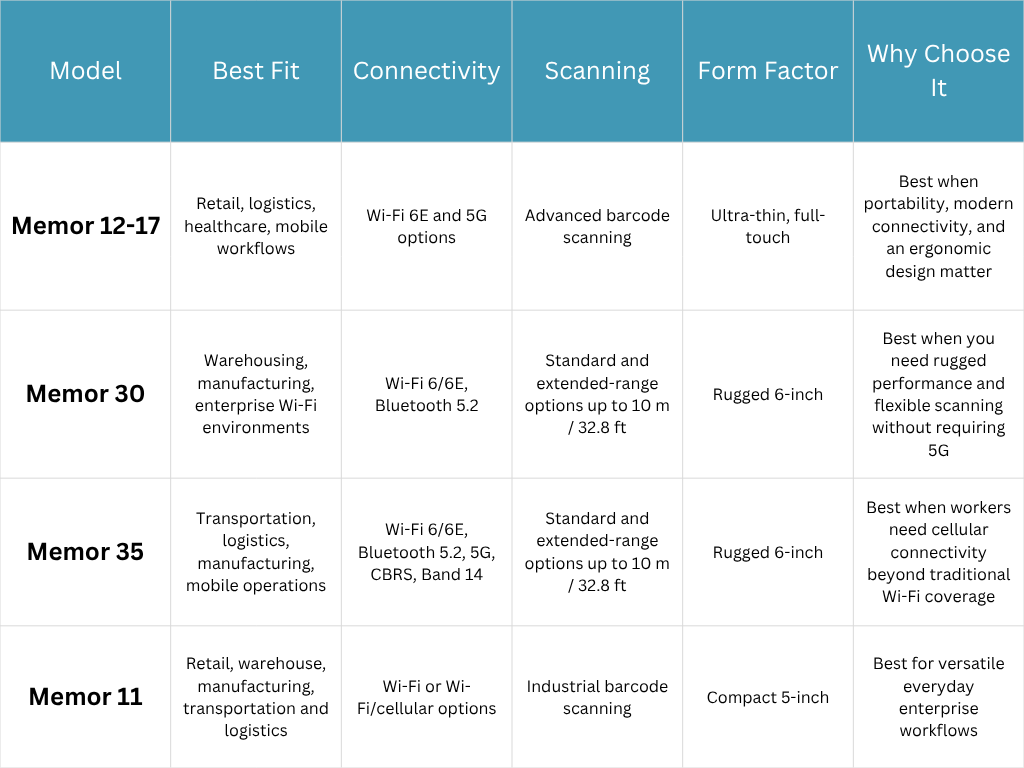
The Simple Version
Choose the Memor 12-17 if you want something thin, lightweight, and built around modern mobile connectivity.
Choose the Memor 30 if your workers mainly operate within Wi-Fi coverage and need rugged hardware with flexible scanning distances.
Choose the Memor 35 if you need similar rugged performance but also need 5G, private LTE options, or cellular connectivity away from Wi-Fi.
Choose the Memor 11 if you want a versatile general-purpose enterprise mobile computer for common scanning and mobile workflows.
What Should You Consider Before Choosing a Datalogic Memor?
Before comparing processors, cameras, or every line of a spec sheet, start with the workflow.
Where Will the Device Be Used?
A device carried around a retail floor all day has different requirements than one used in a warehouse, manufacturing facility, delivery operation, or field environment.
For some teams, a thinner and lighter device may matter most. Others may need greater ruggedness, longer scanning distances, or cellular connectivity.
Will Workers Stay Within Wi-Fi Coverage?
This can quickly narrow down the decision.
If employees spend most of their day inside a facility with reliable Wi-Fi, cellular connectivity may not add much value.
If workers move between buildings, vehicles, outdoor locations, or other areas beyond Wi-Fi coverage, a 5G-capable device may make more sense.
How Far Away Are the Barcodes?
Not every worker scans from the same distance.
Some applications involve barcodes directly in front of the user. Others may require scanning items on high racks, across warehouse aisles, or from several feet away.
The Memor 30 and Memor 35 offer scan engine options designed for working distances ranging from approximately 5 cm up to 10 m, or 1.97 inches to 32.8 feet.
If your team never scans at those distances, extended-range capability may not be a priority.
How Much Does Size Matter?
Workers carrying a device for an entire shift may care just as much about size, weight, and ergonomics as they do about processing power.
The Memor 12-17 is designed around an ultra-thin full-touch form factor, while the Memor 30 and Memor 35 use larger 6-inch displays and more rugged industrial designs.
The Memor 11 sits in between with a compact 5-inch touchscreen and rugged enterprise construction.
What Else Does the Worker Need to Do?
Barcode scanning may only be one part of the job.
Depending on the application, workers may also need:
Mobile applications
NFC
Contactless payments
Cellular connectivity
Cameras
Voice or push-to-talk communication
Wireless charging
Swappable batteries
RFID accessories
Hands-free scanning accessories
The best device should support the entire workflow, not just the barcode scan.
Datalogic Memor 12-17: Best for Slim, Modern Mobility
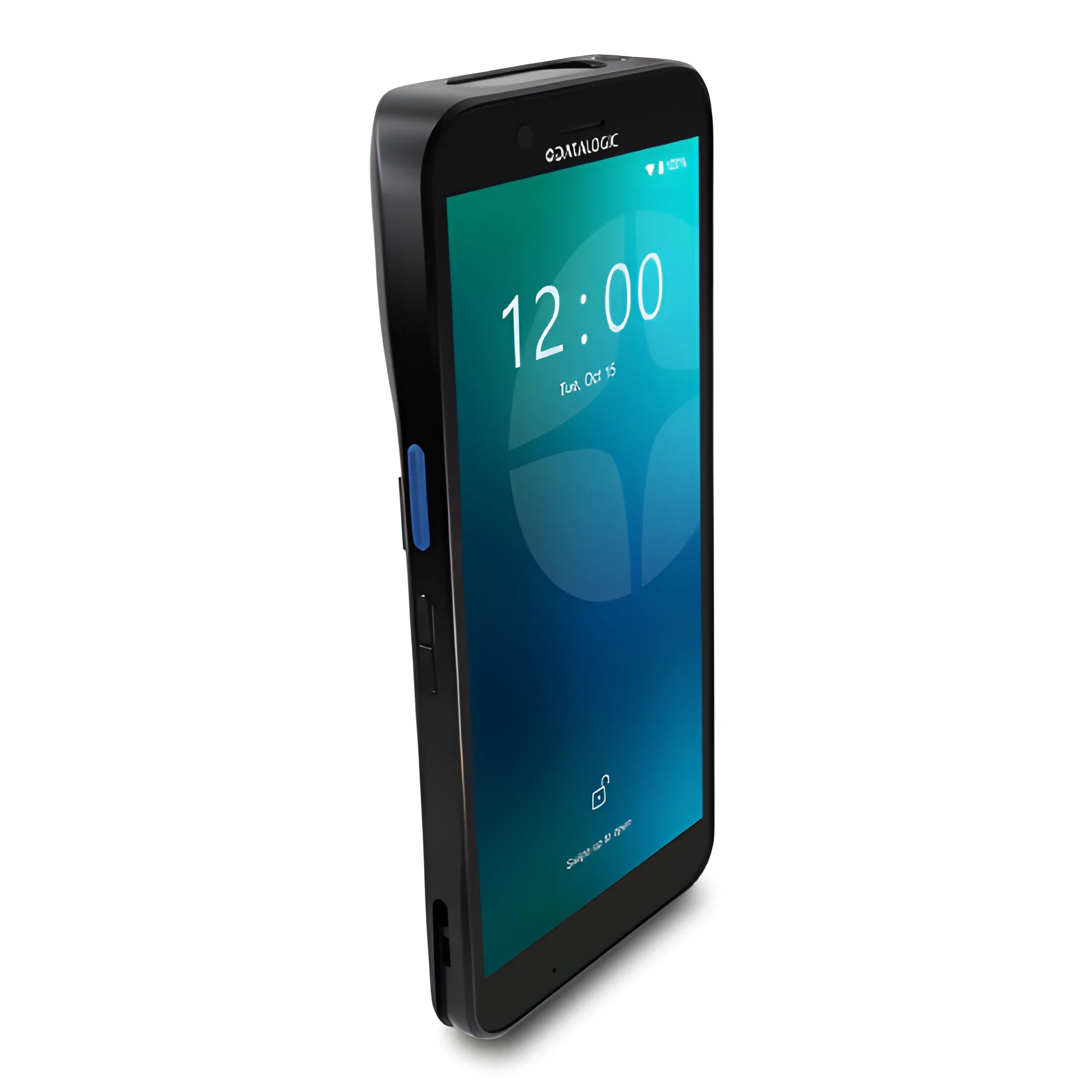
The Datalogic Memor 12-17 is worth considering when your workers need enterprise data capture in a thinner, more pocketable device.
It combines a full-touch Android design with modern wireless connectivity, advanced scanning, and a form factor designed around comfort during daily use.
The Memor 12-17 includes Datalogic's Halogen 2121DL scan engine with Green Spot feedback and DeepSight decoding technology. It is also designed for GS1 Digital Link applications and can read challenging, damaged, or dirty barcodes depending on the application.
Connectivity options include Wi-Fi 6E and 5G, while Multi-Side NFC can support contactless payment workflows.
The device also meets MIL-STD 810H standards for drops and tumbles and uses Corning Gorilla Glass 7 for additional display protection.
Consider the Memor 12-17 if:
Workers carry the device throughout the day
A thin, lightweight form factor matters
You need modern Wi-Fi and 5G connectivity options
Retail, logistics, healthcare, or mobile data capture are primary applications
NFC or mobile payment workflows are important
Long-term Android support matters
The Memor 12-17 supports Android 18 and is positioned with extended hardware and software support.
Datalogic Memor 30: Best for Rugged Wi-Fi Workflows
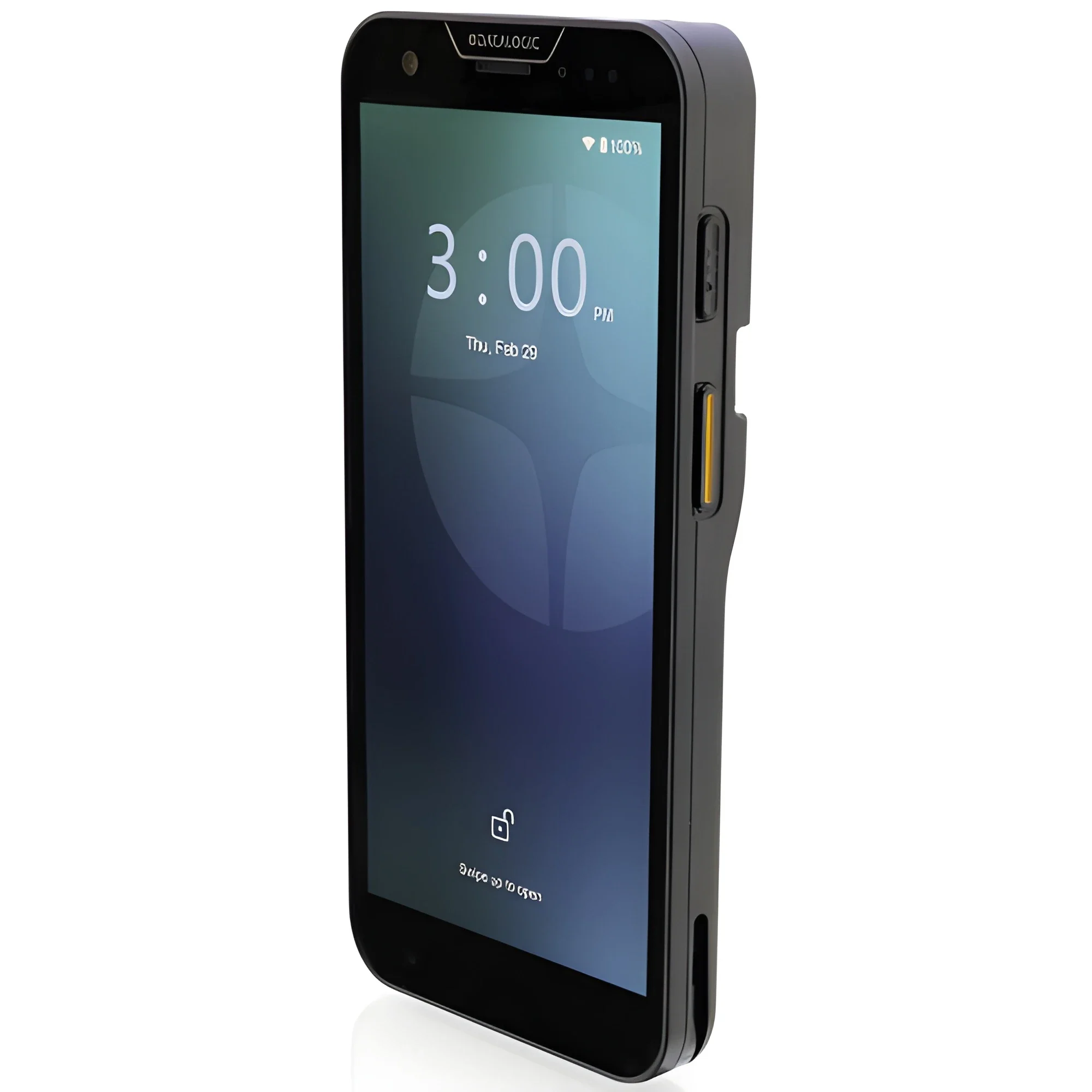
The Datalogic Memor 30 makes sense for teams that need a rugged enterprise mobile computer primarily within Wi-Fi environments.
Its 6-inch FHD+ touchscreen gives workers more room for mobile applications, while Wi-Fi 6/6E and Bluetooth 5.2 provide modern wireless connectivity throughout the facility.
One of the bigger reasons to consider the Memor 30 is its scanning flexibility.
Available Halogen DE2121-DL and DE2121-ER scan engines support working distances from approximately 5 cm up to 10 m, depending on configuration and application.
DeepSight technology helps with barcode reading across challenging lighting conditions, while Green Spot provides visible good-read feedback directly on the label.
The Memor 30 is also built for demanding environments, with IP65/IP68 protection, MIL-STD-810H ruggedness, Gorilla Glass 5, wireless charging, SafeSwap battery technology, and Smart Battery Management.
Consider the Memor 30 if:
Workers operate mainly within Wi-Fi coverage
Warehouse or manufacturing ruggedness matters
You need a larger 6-inch display
Some workflows require longer-distance barcode scanning
Wireless charging and swappable batteries are important
You do not need 5G cellular connectivity
Datalogic Memor 35: Best When You Need 5G
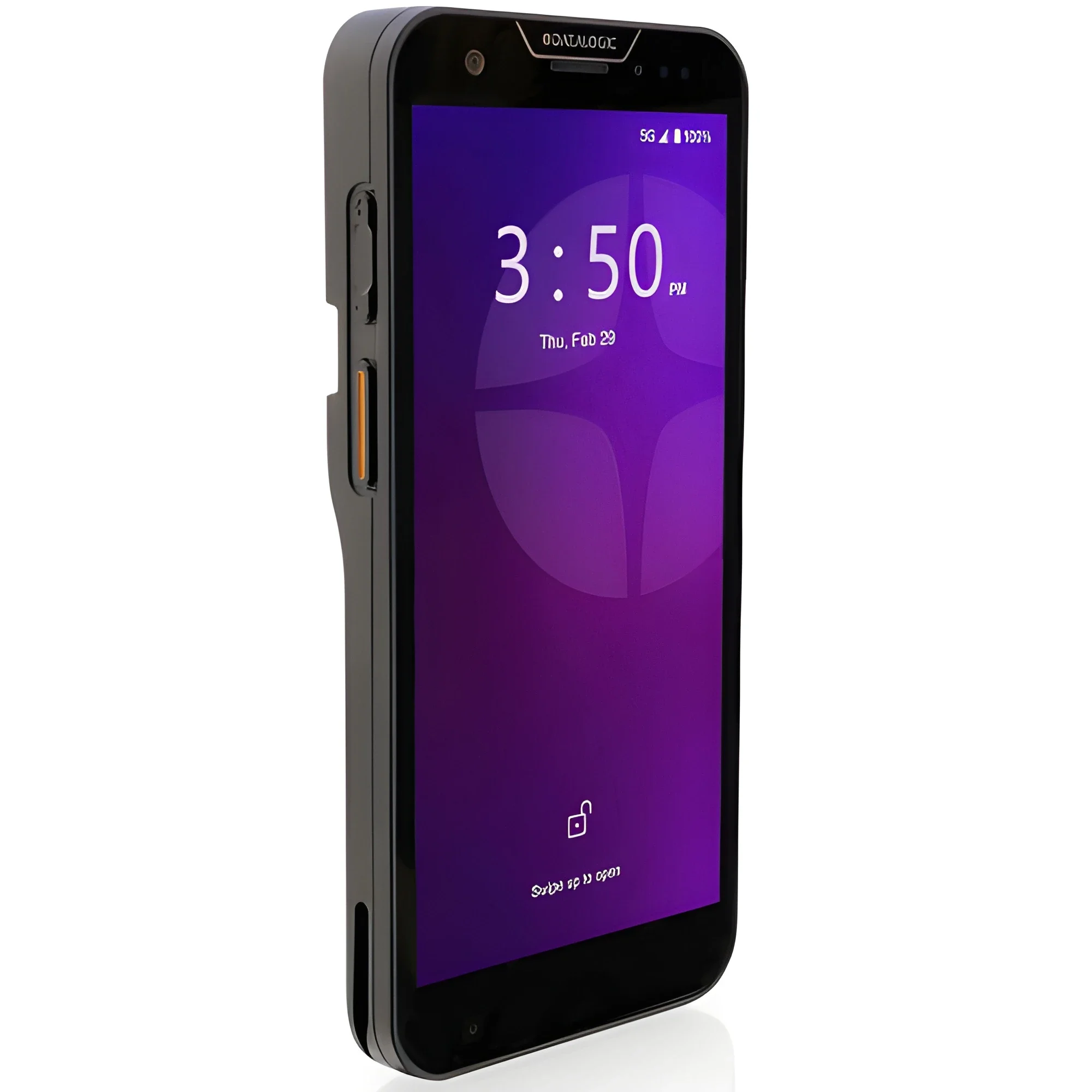
The Datalogic Memor 35 shares many of the same core capabilities as the Memor 30, but connectivity is the key reason to move up to it.
Along with Wi-Fi 6/6E and Bluetooth 5.2, the Memor 35 adds 5G cellular connectivity, CBRS support for private LTE networks, and Band 14 support for U.S. public safety applications.
That can make it a better fit for workers who move beyond traditional facility Wi-Fi or need connectivity across transportation, logistics, manufacturing, and other mobile operations.
The Memor 35 also uses the same Halogen DE2121-DL and DE2121-ER scan engine options, providing scanning capabilities across working distances ranging from approximately 5 cm to 10 m.
It includes the same rugged 6-inch form factor, IP65/IP68 protection, wireless charging, SafeSwap technology, and Android support through Android 18.
Consider the Memor 35 if:
Workers routinely leave Wi-Fi coverage
5G connectivity is required
Your organization uses CBRS private LTE
Band 14 support matters for your application
You need rugged enterprise hardware and extended-range scanning
Transportation, logistics, manufacturing, or mobile field workflows are part of the job
Memor 30 or Memor 35?
This decision can actually be fairly straightforward.
If workers primarily stay connected through Wi-Fi, the Memor 30 may provide the capabilities you need without adding cellular connectivity you will not use.
If workers need connectivity outside your Wi-Fi environment, the Memor 35 adds 5G along with CBRS and Band 14 support.
Datalogic Memor 11: Best for Versatile Everyday Enterprise Work
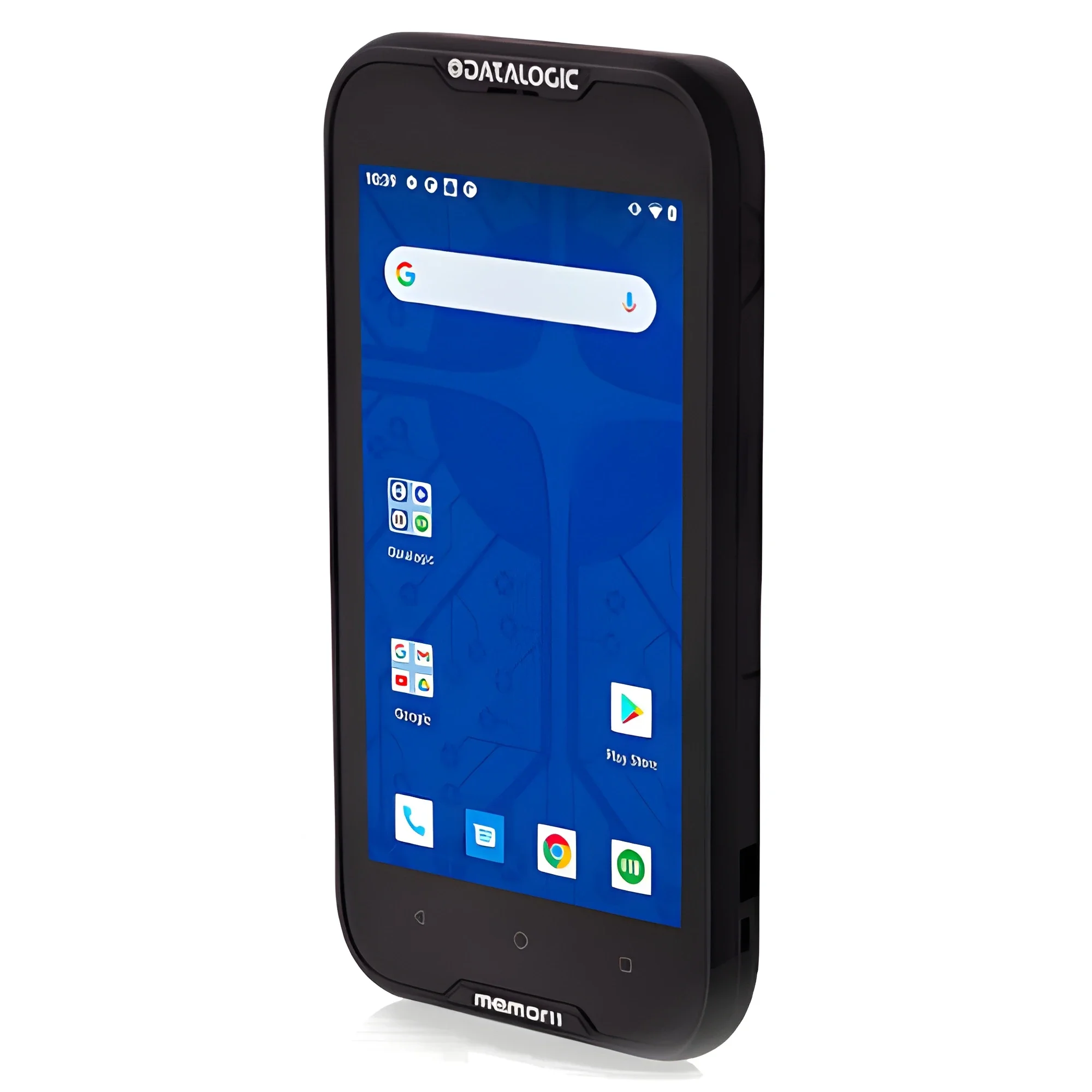
The Datalogic Memor 11 is a more general-purpose option designed for common applications across retail, warehousing, manufacturing, and transportation and logistics.
It uses a compact 5-inch touchscreen and a 2.3 GHz octa-core processor designed to support multiple mobile applications efficiently.
Organizations can choose between Wi-Fi-only and Wi-Fi/cellular configurations, making it easier to match connectivity to the actual workflow.
For barcode scanning, the Memor 11 includes an industrial-grade scanner designed for demanding environments, including dark warehouses, along with Datalogic Green Spot technology for visible good-read feedback.
Battery features include SafeSwap, wireless charging, and Smart Battery Management with configurable profiles designed to help manage battery life.
The Memor 11 can also be paired with Datalogic's RFID Sled for RFID data collection or the HandScanner for hands-free barcode reading.
Another practical advantage for businesses already using Memor 10 devices is accessory compatibility. The Memor 11 is backward compatible with existing Memor 10 accessories, which may help reduce upgrade costs.
Consider the Memor 11 if:
You need a versatile everyday enterprise mobile computer
Retail, warehouse, manufacturing, or transportation workflows are the priority
A compact 5-inch device fits the job
You want a choice between Wi-Fi and Wi-Fi/cellular models
RFID or hands-free scanning accessories may be useful
You already have Memor 10 accessories you want to continue using

Still Not Sure Which Datalogic Memor Is Right for You?
The differences between Datalogic Memor models can look small on a spec sheet, but connectivity, scanning distance, form factor, ruggedness, battery requirements, accessories, and where the device will actually be used can make one model a much better fit than another.
Barcode Factory's U.S.-based team can help you compare the Memor 12-17, Memor 30, Memor 35, Memor 11, and other Datalogic mobile computers based on your actual workflow.
Tell us where your workers use the devices, what they scan, how far away the barcodes are, and what connectivity they need. We can help narrow down the right option before you buy.
Fill out the form below or contact us to talk to an expert!