

What Labels Can Withstand High Temperatures?
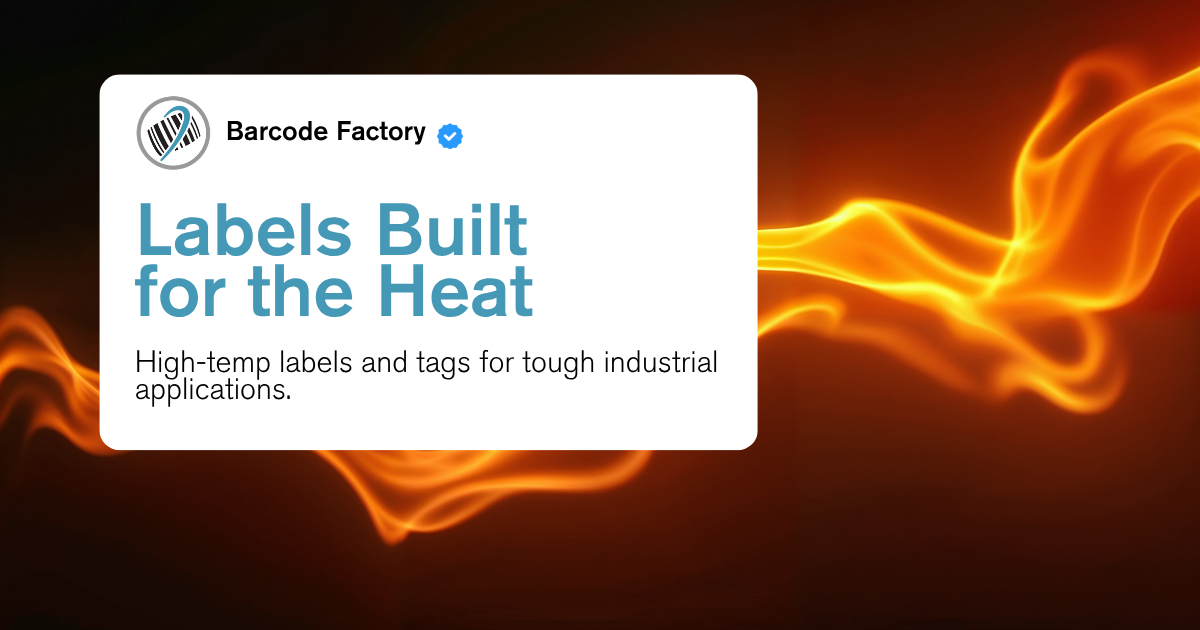
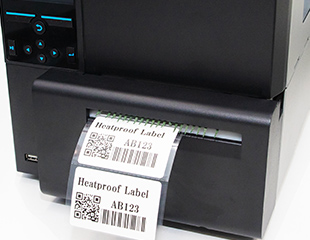
The labels that can withstand high temperatures are high temperature labels, heat resistant labels, and thermal transfer labels or tags made for industrial heat exposure.
These labels are designed to stay attached and readable when standard labels would curl, fall off, fade, or become unreadable. They can support barcoding, product identification, serial numbers, lot tracking, work-in-process labeling, and traceability in harsh manufacturing environments.
The right label depends on more than the highest temperature. Surface material, application temperature, exposure time, chemicals, abrasion, atmosphere, and whether you need an adhesive label or a tag all matter.
Some applications only need moderate heat resistance. Others may require specialty label or tag materials rated for extreme temperatures up to 1200°C, or approximately 2190°F.
Quick Answers Before You Choose a Heat Resistant Label
-
High temperature labels are specialty labels made to survive elevated temperatures, hot surfaces, and industrial processing conditions.
They are commonly used for barcoding, identification, traceability, and work-in-process tracking when standard labels cannot handle the heat.
-
For moderate heat, durable polyester, polyimide, or polyetherimide labels may be a good fit.
For extreme industrial heat, specialty thermal transfer labels or tags may be needed. Barcode Factory offers options for applications up to 350°C, 600°C, 900°C, and 1200°C, depending on the material and process.
-
People often use these terms in similar ways.
The real difference comes down to the application. A label for a circuit board, a hot metal part, a glass process, or a ceramic workflow may all need heat resistance, but the material, adhesive, and print method can be very different.
-
Yes. Many high temperature labels and tags can be thermal transfer printed for barcodes, serial numbers, lot codes, and other variable information.
The label material, ribbon, printer, and process should all be matched together so the printed information stays readable.
-
Heat resistant labels can be used on many industrial surfaces, including steel, aluminum, glass, ceramics, plastics, electronic circuit boards, appliances, automotive components, tools, jigs, and other manufactured parts.
The surface matters because adhesion can change based on material, texture, temperature, and exposure conditions.
-
Some do.
Certain heat resistant label constructions are also designed to handle chemicals, solvents, solder, fluxes, cleaning agents, abrasion, and other harsh conditions. The exact environment should be reviewed before choosing a label.
-
Use an adhesive label when the surface and process allow the label to stay attached.
Use a tag when adhesive is not the best option, such as certain hot metal, glass, ceramic, or extreme heat applications. Tags may also be used when a punch hole or non-adhesive attachment method is needed.
Why Standard Labels Fail in High Heat
Standard labels are not built for extreme temperature changes or harsh industrial processes.
In high heat, the adhesive may soften, lift, or lose grip. The label face material may shrink, curl, discolor, or break down. The barcode or printed information may fade, smear, or become unreadable.
That creates a bigger issue than a bad-looking label.
If a barcode label fails during production, the product can lose its identity before the process is complete. That can affect inventory accuracy, traceability, quality control, compliance, and customer delivery.
High temperature labels are built to keep identification readable through the process, not just when the label is first applied.
Common High Temperature Label Applications
High heat labels are used in industries where products, parts, or materials are exposed to heat, chemicals, abrasion, or harsh handling.
Common applications include:
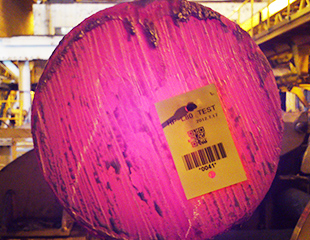
Steel and aluminum
Used for slab, billet, plate, coil, ingot, annealing, homogenizing, and other metal processing applications.
Electronics
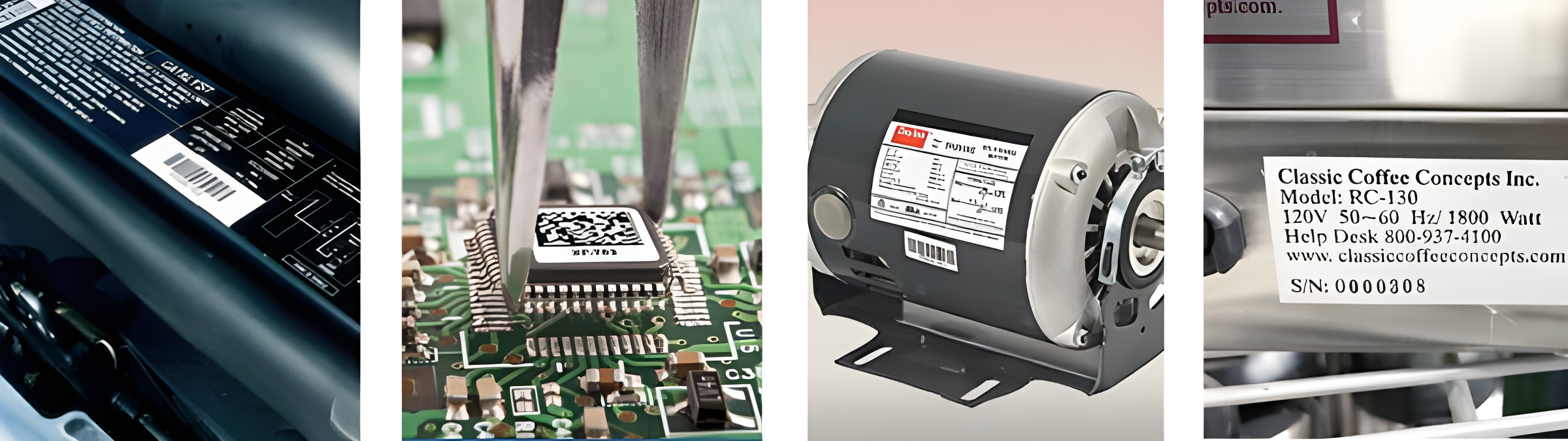
Used for circuit boards, electronic components, reflow processes, solder exposure, and manufacturing traceability.
Glass and ceramics
Used for baking, crucibles, setters, beakers, and other high heat workflows.
Industrial and automotive manufacturing
Used for tools, jigs, appliances, automotive parts, heat treatment, durable goods, and production tracking.
The goal is simple: keep the product or part identifiable even when the process is too hot or harsh for a standard label.
What Information Matters Before Choosing a High Temperature Label?
The best heat resistant label depends on the full application, not just the temperature rating.
Before choosing a label or tag, start with these questions:
What surface will the label be applied to?
Steel, aluminum, glass, plastic, ceramic, circuit boards, and other surfaces may require different materials or adhesives.
What is the application temperature?
A label applied at room temperature and later exposed to heat is different from a label applied directly to a hot surface.
What is the maximum process temperature?
The peak temperature matters, but so does how long the label is exposed.
How quickly does the temperature rise?
Some materials may perform differently depending on the heating rate and process cycle.
What else will the label be exposed to?
Chemicals, solvents, fluxes, solder, cleaning agents, oxygen, abrasion, and handling can all affect performance.
Do you need a label or a tag?
Some applications are better suited for adhesive labels. Others may need durable tags.
Will you print variable data?
If you need barcodes, serial numbers, lot codes, or other variable information, the label, ribbon, and printer setup need to work together.

Where Barcode Factory Can Help
Barcode Factory can help you choose the right high temperature label, heat resistant label, thermal transfer tag, ribbon, and printer setup for your application.
We can review your surface, temperature range, exposure time, application process, chemical exposure, barcode needs, and durability requirements before recommending a solution.
If your current labels are curling, falling off, fading, or becoming unreadable, you may not need a stronger standard label. You may need a label or tag built specifically for heat, harsh processing, and traceability.
Fill out the form below or contact us to talk to an expert!