

What Labels Should You Use in Freezers and Cold Environments?
For freezers, cold storage, refrigerated products, and frozen packaging, you should use freezer labels or freezer adhesive labels.
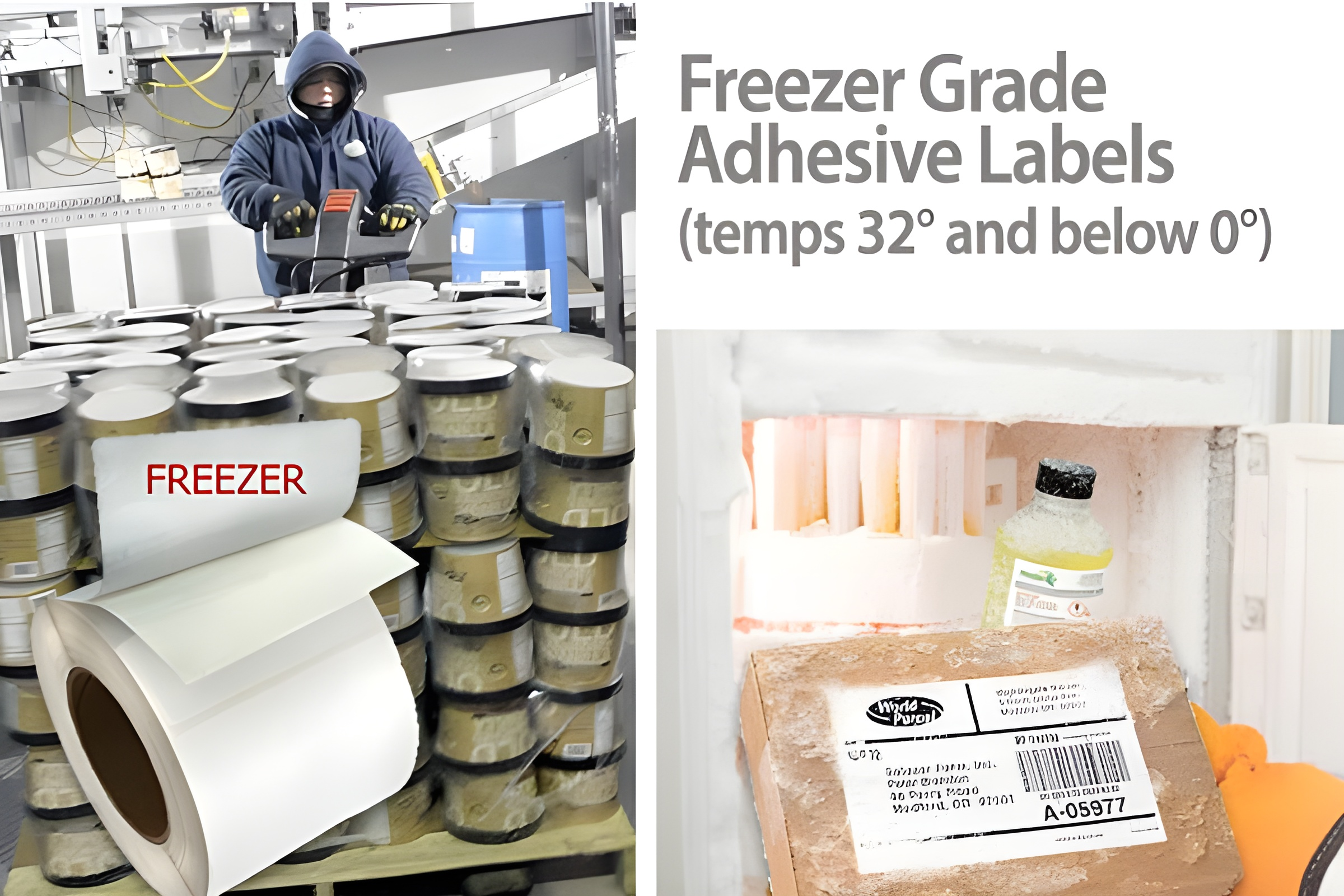
Standard label adhesives can fail when temperatures drop below 32°F. Freezer adhesive labels are made to stay attached in colder environments, including frozen, refrigerated, cold-chain, and cold storage workflows.
Some freezer adhesive labels can be applied in temperatures at or above -15°F and stay attached in service temperatures from -65°F to 120°F. That matters because the label has to do more than print clearly. It has to stay bonded through cold, moisture, handling, and temperature changes.
Featured Freezer Label Option
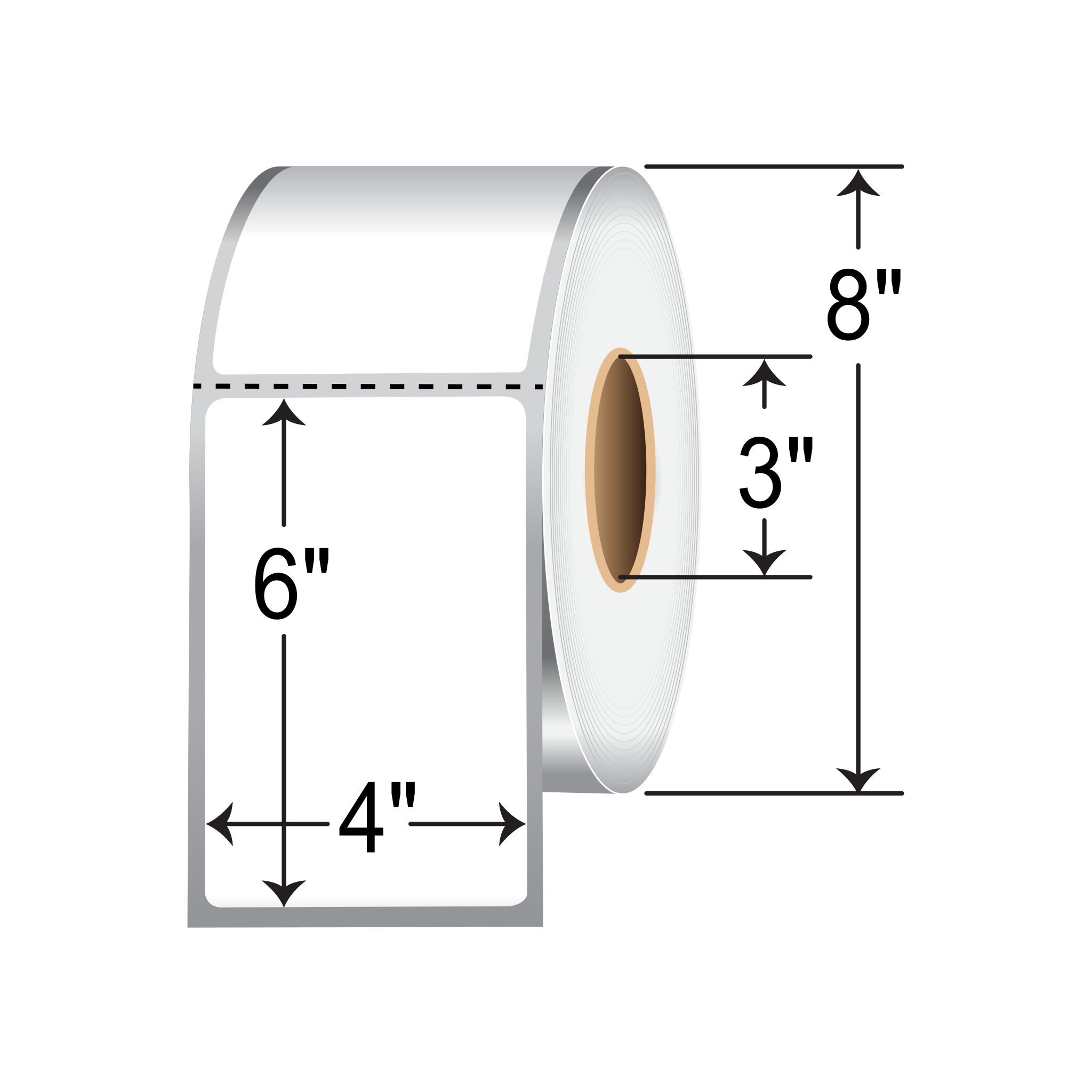
A popular stock option from Barcode Factory is the 4" x 6" Direct Thermal Freezer Label.
This freezer adhesive label is made for cold storage and frozen product workflows where businesses need a clear, scannable label that can stay attached in cold conditions.
It is:
4" x 6"
Direct thermal
Premium top coated paper
Perforated for easy handling
Built for freezer adhesive applications
This type of label is a strong fit for frozen product labeling, cold storage, shipping, inventory, and product identification workflows where a direct thermal label makes sense.
Why Regular Labels Fail in Freezers
A standard label may work fine on a dry box at room temperature. That does not mean it will work in a freezer.
Cold environments create problems for regular labels because the adhesive may not bond properly. Moisture, frost, condensation, and cold packaging surfaces can also get between the label and the product.
That can lead to labels that:
Lift at the corners
Curl or fall off
Become hard to scan
Lose print quality
Fail during storage, shipping, or handling
In a freezer or refrigerated workflow, a bad label is more than annoying. It can slow down inventory, shipping, product identification, and compliance processes.
What Makes Freezer Labels Different?
Freezer labels are not just regular labels used in a cold room.
The adhesive, material, coating, printer type, and application conditions all matter.
The biggest difference is the adhesive. Freezer adhesive is designed to stay attached in frozen and refrigerated conditions where standard permanent adhesives may fail.
Some freezer label options also include coatings that help protect print quality when products move through cold and humid environments. This is important when labels are exposed to condensation, handling, or temperature changes.
Freezer labels can also be useful outside of freezer applications. Because freezer adhesive is stronger than many standard permanent adhesives, it can be a smart choice for room-temperature applications that need a more aggressive adhesive.
Application Temperature vs. Service Temperature
This is one of the most important things to understand before choosing freezer labels.
Application temperature is the temperature when the label is applied.
Service temperature is the temperature range the label can handle after it has already been applied.
That difference matters.
A label may be rated to stay attached in freezing temperatures, but that does not always mean it should be applied directly to a frozen, frosted, wet, or dirty surface.
For best results, freezer labels should be applied to a clean, dry surface whenever possible. If the label is being applied in or near a cold environment, the label material and adhesive need to be rated for that application temperature.
Direct Thermal vs. Thermal Transfer Freezer Labels
Freezer labels are available in both direct thermal and thermal transfer options.
The right choice depends on your printer, label life, surface, and environment.
Direct Thermal Freezer Labels
Direct thermal freezer labels do not require a ribbon. They are a practical option for many short-term freezer, shipping, inventory, and product identification labels.
They are often a good choice when you need simple, cost-effective labels with clear, scannable print.
Thermal Transfer Freezer Labels
Thermal transfer freezer labels use a ribbon. They are often a better fit when the label needs longer-lasting print or added durability.
Thermal transfer may be the better choice for tougher freezer environments, synthetic materials, moisture exposure, heavy handling, or applications where barcode readability needs to last longer.
The ribbon matters too. Premium wax ribbon is commonly used for paper freezer labels. Wax/resin or full resin ribbons are often better for synthetic freezer adhesive labels.
Testing the label and ribbon together is the safest way to confirm performance.
Tips for Applying Freezer Labels
Even a good freezer label can fail if it is applied the wrong way.
For better results, start with the surface.
Make sure the product, box, package, or container is as clean and dry as possible before applying the label. Avoid applying labels over frost, moisture, dust, oil, or residue.
It also helps to store label rolls at room temperature before use. If label rolls sit in cold temperatures before application, the adhesive may not perform as expected.
A few simple rules:
Do this:
Apply labels to clean, dry surfaces
Keep label rolls at room temperature before use
Test labels before placing a large order
Use the right printer, label material, and ribbon combination
Avoid this:
Applying labels directly over frost
Letting label rolls sit in cold storage before use
Assuming standard adhesive will work below 32°F
Skipping samples when the surface or environment is unusual
Freezer label performance depends on the label and the application process.
FAQ
-
You should use freezer labels or freezer adhesive labels in freezers, cold storage, refrigerated environments, and frozen product workflows. These labels are made with adhesives designed to stay attached in colder conditions where standard labels may fail.
-
Freezer labels are labels made for cold, refrigerated, and frozen environments. They use freezer-grade adhesive and materials that can help the label stay attached and readable in low temperatures.
-
Yes. Freezer labels use adhesives designed for cold environments. Regular labels may lift, curl, fall off, or become unreadable when exposed to freezing temperatures, moisture, frost, or condensation.
-
Some freezer adhesive labels can be applied in temperatures at or above -15°F, but the surface still matters. Labels should not be applied directly over frost, moisture, oil, dust, or residue unless the label has been tested for that specific condition.
-
Some freezer adhesive labels can stay attached in service temperatures ranging from -65°F to 120°F. Always check the specific label material before ordering because performance can vary by product, surface, and application.
-
No. Freezer adhesive labels can also be used in room-temperature applications when a stronger, more aggressive adhesive is needed.
-
Use direct thermal freezer labels for simple, cost-effective, short-term labeling where no ribbon is preferred. Use thermal transfer freezer labels when you need longer-lasting print, synthetic materials, or added resistance to moisture, handling, or tougher environments.
-
Thermal transfer freezer labels should be matched with the right ribbon. Premium wax is often used for paper freezer labels, while wax/resin or full resin ribbons are often better for synthetic freezer adhesive labels.

Where Barcode Factory Can Help
Barcode Factory can help you choose freezer labels that fit your printer, product, surface, temperature range, and workflow.
Some applications need a stock direct thermal freezer label. Others may need thermal transfer freezer labels, synthetic freezer labels, a specific ribbon, custom sizing, test samples, or a label supply program.
Our team can help with:
Freezer adhesive labels
Direct thermal freezer labels
Thermal transfer freezer labels
Paper and synthetic freezer label options
Label and ribbon matching
Printer compatibility
Stocked and custom label supply
The goal is simple: choose the label that works in the real environment, not just the label that fits the printer.
Fill out the form below or contact us to talk to an expert!