

FSMA 204 Made Simple: How Barcode Systems Support FDA Food Traceability
If you have been hearing more buzz about the FDA Food Traceability Rule, FSMA 204, and new compliance requirements but still are not sure what actually applies to your business, you are not alone.
The good news is this. While the regulation sounds complicated, the solution does not have to be.
In this guide, we break down the FDA Food Traceability Rule in plain English, explain how it fits into broader FSMA requirements, and show how barcode labeling systems play a major role in making compliance manageable instead of overwhelming.
No legal jargon. No panic. Just practical clarity.
What Is the FDA Food Traceability Rule?
The Food Traceability Rule is part of the Food Safety Modernization Act, commonly referred to as FSMA 204.
Its purpose is simple. It improves the FDA’s ability to quickly trace certain high risk foods through the supply chain during a food safety event.
Instead of relying on limited one step forward, one step back tracking, FSMA 204 requires more detailed records for specific foods so potential contamination can be identified and isolated faster.
At its core, this rule is about speed, accuracy, and accountability.
Who This Applies To
FSMA 204 applies to companies that manufacture, process, pack, or hold foods listed on the FDA’s Food Traceability List.
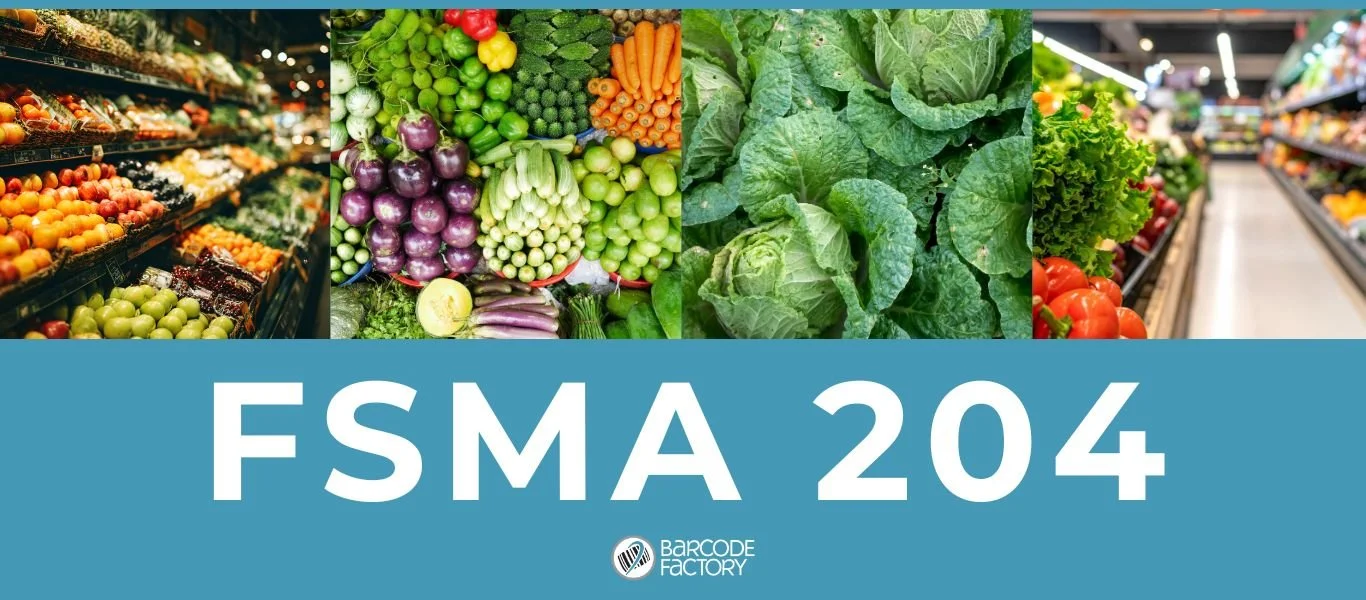
Some common examples include leafy greens and fresh cut produce, tomatoes, cucumbers, melons, herbs, soft cheeses, shell eggs, nut butters, seafood, and ready to eat deli salads.
If your business handles these foods, or uses them as ingredients, the rule likely applies to you.
Why Food Traceability Matters More Now
Food safety incidents are expensive, disruptive, and damaging to brand trust. In the past, weak traceability forced companies into massive recalls simply because they could not identify which lots were actually affected.
FSMA 204 aims to change that by ensuring companies can clearly identify where food came from, track where it went, and respond quickly when issues arise.
Better traceability leads to smaller recalls, faster response times, and fewer disruptions across the supply chain.
What FSMA 204 Actually Requires
Here is what the Food Traceability Rule requires in practical terms.
Companies must maintain a traceability plan that explains how products are tracked, how lot codes are assigned, and how records are managed.
Each batch or lot of food must be assigned a unique traceability lot code. That code follows the product through the supply chain and connects all related records.
Certain points in the supply chain require data capture. These points include receiving, processing, shipping, and transforming food into a new product.
All records must connect through the traceability lot code so products can be traced backward and forward efficiently.
If the FDA requests traceability records, companies must be able to provide them quickly. Disorganized paperwork or disconnected systems will not meet expectations.
While enforcement has been extended, companies are strongly encouraged to prepare now. Implementing traceability systems takes time, especially when multiple suppliers, products, and facilities are involved.
Where Barcodes Come In

This is where traceability stops being theoretical and starts being practical.
Barcode labeling systems are one of the most effective ways to support FSMA 204 compliance because they automate data capture and reduce human error.
A complete barcode traceability setup typically includes barcode labels, barcode printers, barcode scanners, and a system that stores and links traceability records.
Together, these tools make it easier to track products accurately and retrieve records when needed.
A Simple Traceability Example
Imagine a food manufacturer producing fresh salsa.
Tomatoes arrive labeled with a traceability lot code. The tomatoes are scanned upon receipt, logging supplier, date, and quantity.
During production, the ingredient lot codes are linked to a new salsa batch lot code. Finished cases are labeled and scanned when shipped.
If an issue later arises with a tomato supplier, the company can quickly identify which salsa batches were affected and where they were shipped.
Instead of recalling everything, the issue is isolated to specific lots and handled with confidence.
Why Barcodes Help Beyond Compliance
Barcode systems do more than help meet regulatory requirements.
They speed up receiving and shipping, reduce data entry errors, improve inventory accuracy, strengthen recall readiness, and support better communication with retailers and partners.
Traceability becomes part of normal operations instead of a stressful reaction during an emergency.
Prepare Now or Scramble Later
FSMA 204 is not just another regulatory checkbox. It represents a shift toward smarter, more transparent food supply chains.
Companies that prepare early gain time to test systems, reduce audit friction, improve visibility across operations, and respond faster when issues arise.
Waiting until enforcement ramps up increases risk, cost, and pressure.
A Simple Option: Smart Tags for Food Traceability
For companies that want an even easier way to strengthen traceability, smart barcode tags offer a straightforward solution.
How Barcode Smart Tags Work for Food Traceability

Apply the Smart Tag
A temperature sensitive barcode label is applied directly to the product or shipment. No special equipment or complex setup required.Scan at Key Points
The tag is scanned using a mobile device or barcode scanner during receiving, shipping, or storage. This fits naturally into existing workflows.Track in Real Time
Each scan updates a cloud based system with temperature data, alerts, and compliance records. This creates an added layer of visibility and documentation without manual logging.
Smart tags help bridge the gap between traditional barcoding and real time monitoring, making them especially useful for cold chain products and high risk foods.

Need help with FSMA 204?
Navigating FSMA requirements does not mean you have to overhaul your entire operation overnight.
We help food manufacturers and suppliers build practical, scalable barcode and labeling solutions that support traceability goals without unnecessary complexity! From printers and scanners to durable labels and system guidance, we work alongside businesses to ensure traceability systems are reliable, efficient, and aligned with real-world workflows.
Fill out the quick form below to talk to an expert.